
Owner outcomes
Enterprise value is not the number that matters. What you keep is, and what you do with it. This pillar is scored for the owner, not the buyer.
The film
Set before the letter of intent
Tax strategy, estate architecture, the insurance on the deal and the family, and a plan for the proceeds: what changes what the family keeps, and why it cannot wait for a buyer.
What buyers measure
- Deal structure and tax treatment set before the letter of intent
- Estate architecture with the lead time it needs
- Insurance on the deal and on the family
- A plan for the proceeds, and for the day after
What good looks like
- A tax plan modeled before going to market
- Trusts and ownership set up years ahead
- A written plan for the first year after close
- A number the family has agreed on
Where owners fall short
- Tax planned after the letter of intent
- Net worth concentrated in one asset the day after
- No purpose after the sale
- A family that finds out at closing
The numbers that move it
What gets measured on this pillar
After-tax proceeds
Against enterprise value
Share of net worth in the business
Concentration
Coverage on the deal
Insurance in place
Post-exit plan
Months in writing
The elements behind it
6 of the 36 FNDRS Elements®
The score on this pillar is the sum of these. Each opens its own entry.
All 36 elements- Tx29 · Tax StrategyDeal and entity structure set before the LOI to protect proceeds.
- Es30 · Estate ArchitectureTrusts and ownership set up so wealth transfers as planned.
- In31 · Insurance ShieldCoverage that protects the deal and the family from a bad year.
- Ap32 · After-Tax ProceedsWhat the owner actually keeps at close.
- Fr35 · FreedomA business that runs, and pays, without the owner.
- Lg36 · LegacyWhat outlasts the transaction: people, brand, community.
 1:39
Whiteboard session
Nick on tax strategy
Nick on why the tax conversation starts years before an offer, the questions that shape it, and who to bring in. It changes what you keep, not the valuation.
 Nick LongCEO and co-founder
How FNDRS moves it
Advised, tracked, and re-scored
Planning for the proceeds starts before the market process, with your own tax, estate, and wealth advisors, so structure, estate, and insurance are set before the wire lands, and the plan for the day after is already written.
- In the processPost-exit planning
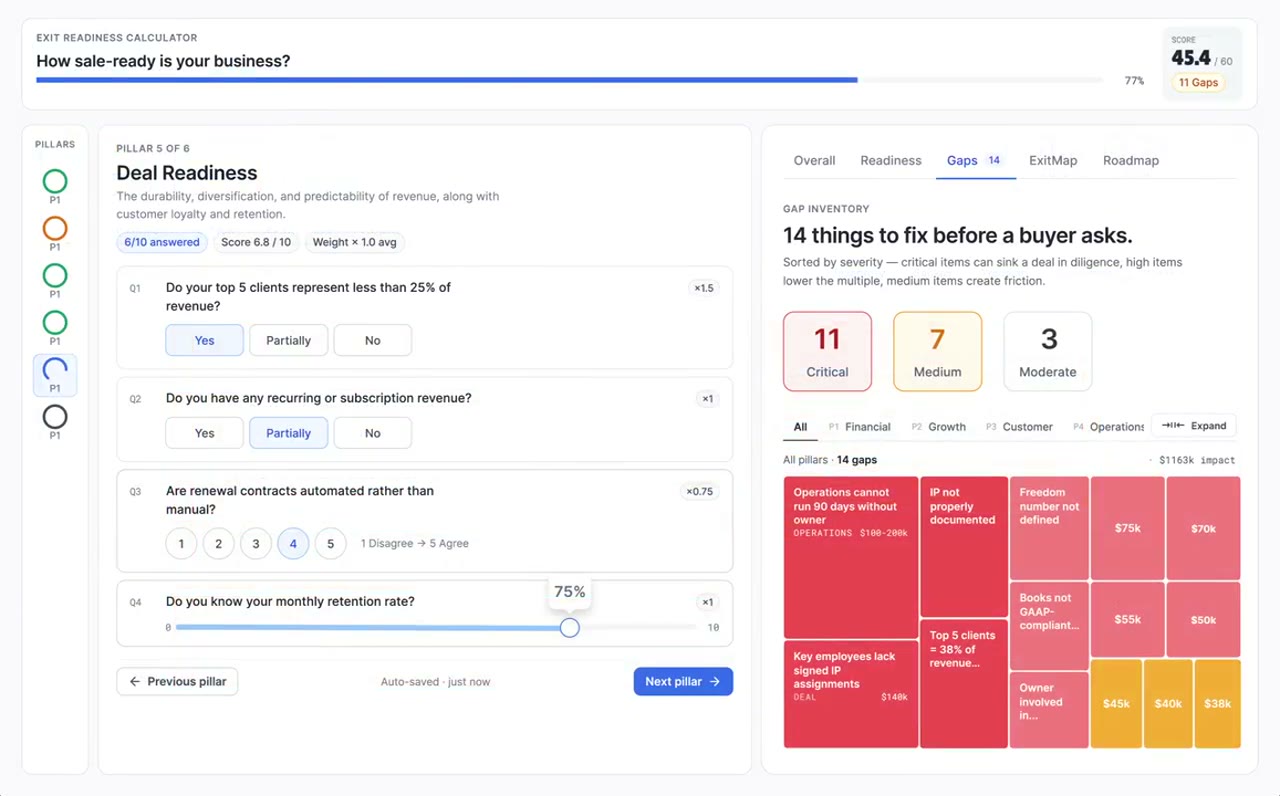
- In the platformGap calculator
- ToolsPlan for after the sale
Questions
Owners ask
Some of the most valuable structures need two years or more of lead time before a sale. Planning after the letter of intent leaves most of them on the table.
No. FNDRS does not manage money or give investment advice. The plan for the proceeds starts during the sale process, alongside your own tax and wealth advisors, so the money has somewhere to go on day one.
Where do you stand on owner outcomes?
The exit-readiness score gives this pillar a mark from zero to one hundred and the three gaps worth closing first.