
Grow your business with FNDRS
Growth is a score you can move. FNDRS gives you the platform that measures it, the method behind the measure, the process that turns the measure into a plan, and the people who run that plan with owners like you.
The film
How to grow with FNDRS
Watch how the platform, the method, the process, and the people behind FNDRS work together to grow the value of your business.
What you work with
Four things that work as one
The platform scores the business, the method says what the score means, the process moves it, and the ecosystem keeps you in a room of people who have moved theirs. Then the platform scores again.
The platform
How you build on the platform
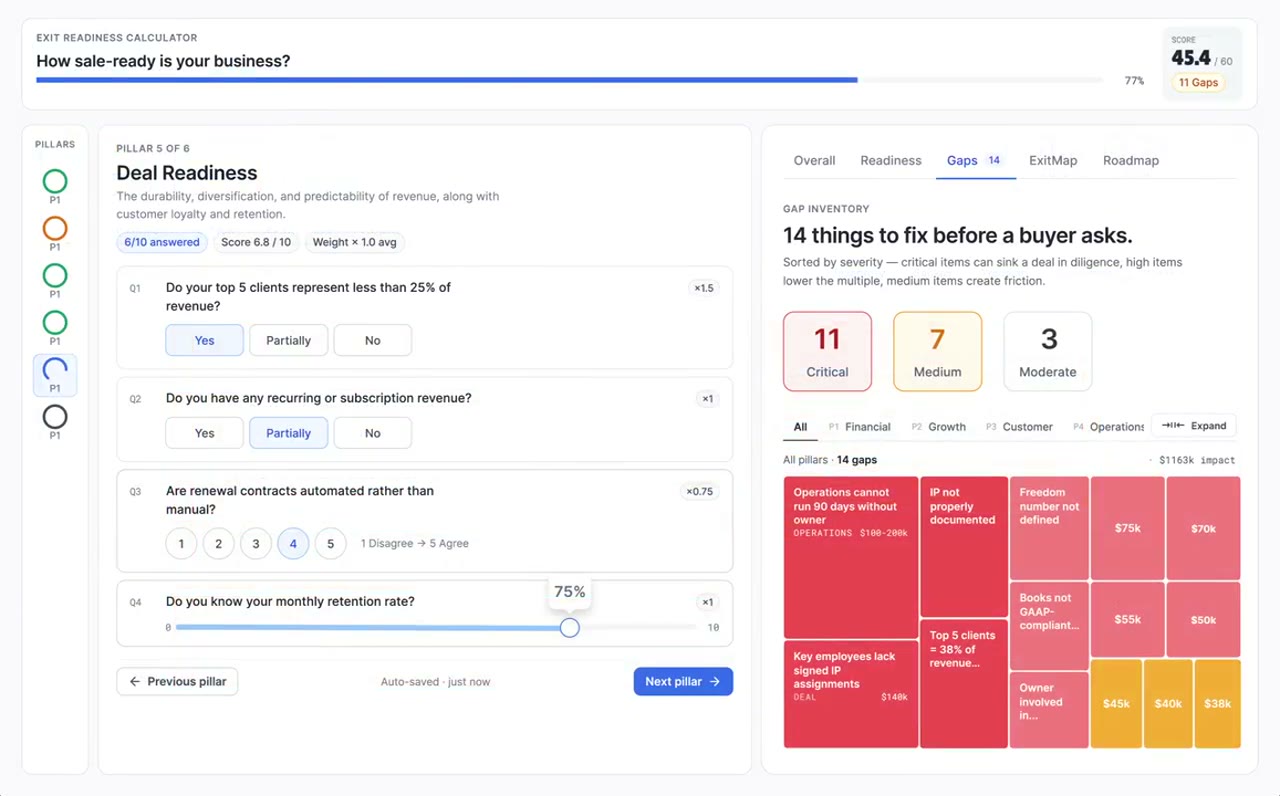
Each part of the platform is a step you take with a FNDRS advisor: find the gaps, value the business, score it, work the plan, lay it over the quarters ahead, and watch the number move.
The elements that move first
Growth is elements moving
A bigger top line on its own does not make a company worth more. The growth buyers pay for is these five moving together: revenue that repeats, a team that runs without you, written systems, a customer base no one account can tip, and a forecast that comes true.
- Rr09 · Recurring RevenueRevenue that repeats under contract or habit without being re-sold each period.
- Md13 · Management DepthA leadership team that runs the company without the owner in the room.
- Sp25 · SOP LibraryWritten, current procedures for every repeatable task.
- Cc21 · Customer ConcentrationRevenue share held by the top customers. Scored as control: higher is safer.
- Pd12 · PredictabilityForecasts that come true; a pipeline a buyer can underwrite.
A founder on film
Recurring revenue, the founder’s role, and the financials: the three things his FNDRS Discovery Day named, and the twelve months that followed.
Joe Seehey CEO, Cured Nutrition · Colorado
Your week
The calendar is the org chart
Twenty blocks, all of them yours, is what growing past the founder feels like from the inside. Management depth takes the operating meetings off your week. Owner dependence, once it is moved, takes the decisions that used to wait for you. What is left is two morning check-ins and a monthly review, and a business that does the work.
VIP Days
A few days in person working on the business.
Nick Long on the FNDRS VIP Days: a few days with the team over whiteboards and laptops, the sales engine taken apart and relaunched, and what came of it for three businesses in the film.
 Nick LongCEO and co-founder
Element by element
Hear the elements explained
FNDRS Faculty explain the FNDRS Elements one at a time: what it is, what it means to a buyer, and where an owner starts. Choose a tile to watch it here: 18 of the 36 have a session of their own so far, and the rest play their part of their family's film.
Troy HoffmanTime
Questions
What growing owners ask
No. Most owners who come to FNDRS are years from a sale, and the work is the same either way: the elements a buyer pays for are the elements that make a company easier to run and to grow. Start with the exit score. It shows where you stand today and what to move first, whether the sale is next year or never.
Nothing. The score is free, takes about fifteen minutes, and comes back with the six pillars scored, a preliminary range, and the three gaps that matter most. The paid work starts only if you want FNDRS in the room to move the score.
The exit score takes about fifteen minutes if you have last year's numbers and your customer list nearby. The full valuation runs in the platform and takes about ten minutes more; it is the one that scores every element today and at target and shows the gap between the two.
A spreadsheet holds what you type into it. The platform holds the method: it scores each element against the bands buyers use, ties every task to the score it is expected to move, and shows the valuation change as the work lands. It also keeps the record a buyer will ask for later, so diligence starts with the data room half built.
The order does not change; the pace does. Analysis and rework come first either way. With years in hand you work the elements in the order they compound, and the sale, when it comes, is a shorter process because the company is already the one a buyer wants.
Your team, with FNDRS beside it. An exit advisor lays the tasks out over the quarters ahead and reads the score as they land; your people keep running the business. The events and the series are where you meet the founders who have run the same plan.
Know your number before you grow into it
The exit score is free and takes about fifteen minutes. It shows where the value sits today and what to move first.