
Sell
Premium exits are not negotiated. They are prepared.
Sell-side advisory for founder-led businesses
We examine your company the way a buyer will, address what would cost you, and run a competitive process from first conversation to funds flow.
Before you sell, hear it from the founders who worked with FNDRS.47 founders on film
Welcome
Welcome to M&A at FNDRS
How a FNDRS sale runs, from the first conversation to funds flow, from the people who run it.
The asymmetry
You will sell a business once
The people across the table buy companies for a living. They have a deal team, a diligence playbook, a financing model, and a view of what your business is worth that they formed before the first call. Most founders arrive with a tax return and a number a friend mentioned at dinner.
That gap has a price. It shows up as a lower multiple, as add-backs that get disallowed, as an earn-out you did not want, as a working capital adjustment nobody explained, and as a price reduction in the last week of diligence when you are too tired to walk away.
Our job is to close that gap before it costs you.
The six pillars
Six things every buyer measures
The 36 FNDRS Elements® roll up into six pillars, each scored from zero to one hundred.
What we do
Prepare, position, process, protect
Four kinds of work, one team. The order is the order a sale happens in.
Prepare
We rebuild your financials the way a buyer's accountants will: restated income statement, adjusted EBITDA, proof of cash, working capital. We find the issues first: the yellow and red flags a buyer would raise.
Position
We decide, with evidence, which category buyers should place you in and where you belong in its valuation range. Then we build the CIM and the narrative to support it.
Process
We build the buyer universe, run outreach under NDA, manage management meetings, and bring multiple qualified parties to the table at the same time. Competition is what turns interest into price.
Protect
From LOI to close, we negotiate structure, manage diligence, and coordinate your attorney and tax advisors. The goal is simple: the deal you signed is the deal that closes.
Why founders choose us
We bring an institutional discipline to every sale: a rigorous process that puts several buyers in competition at once, and a CIM and offering materials written to the standard those buyers expect. We take each company to the right buyers through our own buyer network and database and our team's relationships, not a subscription database alone, and the team includes a CFA charterholder, which matters most in due diligence and the buyer's Quality of Earnings review.
Know your three numbers
Most founders are missing at least two of these
The distance between them tells you whether to sell now, build first, or change the structure. We help you find the second and third. The FNDRS wealth partners help you find the first.
The number you need
What the next chapter actually costs, after tax, for the rest of your life.
The number the market will pay
Not a rule of thumb. A range, built from your adjusted EBITDA and how buyers will see your risk.
The number you keep
Enterprise value minus debt, fees, working capital adjustments, deferred and contingent consideration, and tax.
How every engagement starts
Start with the Go-To-Market Analysis
Before anyone talks to a buyer, we build the file a buyer would build on you. The Go-To-Market Analysis (GTMA) delivers a full deal workbook and a deal scenarios calculator: your adjusted EBITDA with every add-back tested, your position in the valuation range, the issues a buyer would raise, and a model of how different deal structures translate into what you keep.
You finish knowing where you are, where you could be, and which exit options are open to you. Whether you go to market next month or in three years is your call.
The deal workbook
Adjusted EBITDA, with every add-back tested and documented.
Who we serve
Founder-led businesses in the lower middle market
Owner-operated companies where the founder is still central to the business and a sale will be the largest financial event of their life.
Typically $1 million to $25 million of adjusted EBITDA.
Sector experience
- Home and exterior services
- Roofing and solar
- Commercial and specialty contracting
- Precision manufacturing
- Industrial distribution and recycling
- Packaging
- Healthcare services and physician practices
- Medical devices
- Consumer and direct-to-consumer brands
- Business services and software
- Insurance and wealth distribution
- Specialty retail and dealerships
- Agritourism and hospitality
Situations we see most
- A founder three years from the exit they want, asking what to fix first.
- A founder with a number in mind who may reach it in two steps: a first sale now, with equity rolled for a second bite later.
- An unsolicited approach from a private equity firm or a competitor.
- A business that has outgrown its category and is being valued like what it used to be.
- Multiple legal entities, shared costs, and related-party leases that need to become one clear story.
- Owner-held real estate alongside the operating business.
- A strong year, or a weak one, that makes normal earnings hard to define.
- Partners with different timelines.
- A tax or holding-period date that fixes the calendar.
The deal team
Led by Scott Stepanik, from the first conversation to the close
Scott Stepanik leads every FNDRS sale, from the first read of the numbers to the day the money moves, with the deal team alongside and the FNDRS founders, who have built companies of their own, behind it.
 Leads your saleScott StepanikDirector of M&ALeads every FNDRS sale: the preparation, the confidential process, the negotiation, and the close.
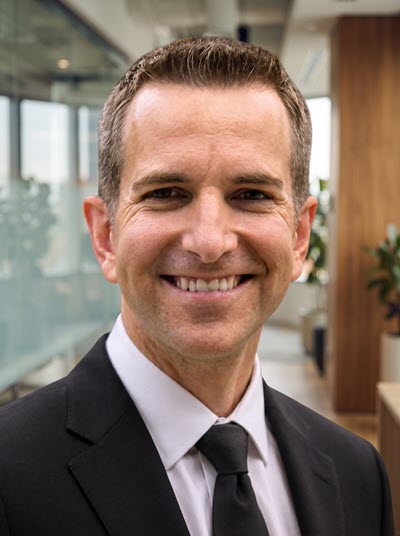 The deal teamRuss PragDirector of acquisitionsLeads the Main Street Acquisitions group, with over 10 years in finance, acquisitions, and M&A.

 Behind the team: Nick Long and Troy Hoffman, the FNDRS founders, who have built companies of their own.
The FNDRS Exit Playbook
The frameworks we use with founders, published in full
How buyers set multiples. Why add-backs fail. What an LOI is really saying. When to roll equity. Read them before you talk to anyone, including us.
The FNDRS Podcast · Episode 5
The $500K exit lesson
Co-founders Nick Long and Troy Hoffman on what it means to build, scale, and exit a business, and why a cohesive ecosystem beats siloed teams. Troy on the years and money he spent on trial and error before FNDRS, insurance as risk protection, and lessons from the live event’s speakers.
Nick LongHost, CEO and co-founder of FNDRS
Element by element
Hear the elements explained
FNDRS Faculty explain the FNDRS Elements one at a time: what it is, what it means to a buyer, and where an owner starts. Choose a tile to watch it here: 18 of the 36 have a session of their own so far, and the rest play their part of their family's film.
Troy HoffmanTime
A well-run process usually takes seven to twelve months from signing to the wire. Preparation can add time before that, and the preparation is where most of the value is created.
No. A valuation is an opinion of value on a date. The GTMA is a picture of what a buyer would see, including the adjustments they will make, the issues they will raise, and how different deal structures affect what you keep. It is designed for decision-making, not for a report.
Yes. Our advisory model is built so that we can afford to say not yet. Many founders who complete a GTMA spend the following year moving up the range before going to market.
Buyers receive a blind teaser with no identifying details. Anyone who wants more signs a non-disclosure agreement before receiving the CIM. We control who is contacted, in what order, and what they receive. Competitors and customers can be excluded at your direction.
We will review it with you. Often the best use of an unsolicited offer is as a floor for a competitive process. Sometimes it is the right deal, and the work is negotiating the terms before exclusivity.
It depends on the buyer and the structure. A strategic buyer with existing management may need three to twelve months of transition. A financial buyer buying a platform may want you for longer, sometimes with a continued equity stake. Your post-close role is one of the terms we negotiate.
Every engagement begins the same way: a confidential conversation about objectives, timing, and options
No pitch. No obligation. If the honest answer is not yet, we will tell you, and tell you what to work on.