
Sell a business in California
The road from today to the years after a sale runs through California's rules. Here it is in the order you will meet them: where you stand, what the state takes, the rules of the sale, who buys, and what the money can do after.
California is one of the busiest markets in the country for business sales, with buyers of every kind already active. The state's share of the gain is among the highest, 13.3% at the top. Expect a tax-clearance or bulk-sale notice before closing, and a licensed broker.
Tax on the gain: Gains taxed as ordinary income at the top rate.
Today
Where you stand
California taxes the gain of a founder like wages, up to 13.3 percent, and still runs the strictest non-compete ban in the country.
The biggest small-business population in the country: 4.3 million firms and 7.6 million employees, nearly half of the workforce of the state.
in California, 99.8 percent of all firms.
people employed by small firms, 47.4 percent of California employees.
more small businesses than the prior profile, which counted 4.2 million.
The elements this touches
- TmTime The years before you want out. It feeds the exit-readiness score and never moves the price; every other decision is planned against it.
The deal team on what changes when you sell a business in California.
Before the letter of intent
What California takes
The tax on the gain, and what to settle before a buyer names a price
No capital gains preference and no QSBS exclusion: the gain is ordinary income at up to 12.3 percent, plus 1 percent on income above $1 million.
Gains taxed as ordinary income at the top rate.
A founder on film
On what he learned about tax on the way to the sale.
Lewis Titus Wastewater purification and manufacturing · Wyoming
Gains taxed at 13.3 percent
California taxes capital gains as ordinary income at rates from 1 to 13.3 percent, with no lower rate for long-term gains.
A 1 percent surtax
The top 13.3 percent is a 12.3 percent bracket plus the 1 percent Mental Health Services Tax on income over $1 million, from Proposition 63 of 2004.
No QSBS exclusion
California does not conform to federal Section 1202, so gain excluded federally as qualified small business stock is fully taxed by the state.
The rate is the state's top rate on the gain for the year shown, the same figure as the indicator in the hero, so the two can never disagree.
The elements this touches
- TxTax Strategy The deal and entity structure, set before the letter of intent. FNDRS tracks whether it is in place. It never moves the price; it changes what you keep.
- ApAfter-Tax Proceeds What you keep at close. FNDRS records the pre-tax walk-away and the gap to your number. It never moves the price, and the tax on it is a question for your CPA.
Under contract and at closing
The rules of the sale
The rules a sale in California runs under
A bulk-sale notice 12 business days before closing for inventory-based sellers, and a non-compete only under the sale-of-goodwill exception; employers cannot enforce any other.
01Bulk sales law covers inventory
The bulk sales law covers sellers whose main business is selling inventory from stock, including restaurants, for sales between $10,000 and $5 million net of liens.
Stimmel Law, 2025
02Notice 12 business days ahead
The buyer must record, publish, and mail the bulk-sale notice to the county tax collector at least 12 business days before the sale.
California Globe
03Sale-of-goodwill covenants survive
Section 16600 voids non-competes and since January 2024 employers may not attempt to enforce one; section 16601 still allows a covenant from someone selling goodwill.
Latham & Watkins, 2024
The elements this touches
- LcLegal & Compliance Contracts, licences, and filings in order and enforceable. The FNDRS valuation reads it, and the score moves the multiple.
- DrData Room The documents a buyer will ask for, ready before they ask. FNDRS tracks it in the deal-readiness report card; it decides how fast and how cleanly a deal closes.
One thing you would not guess
A founder can exclude millions of QSBS gain on the federal return and still owe California up to 13.3 percent on all of it.
California adds the federally excluded QSBS gain back and taxes the whole amount as ordinary income at up to 13.3 percent.
A sale in California
A premium personal-care brand in California
Members of the FNDRS M&A team advised on this sale. The business, the story it went to market with, and what buyers paid for it.
- The situation
- A founder-built natural personal-care brand in Southern California: sold online and in stores, with strong direct-to-consumer economics, growing national retail placement, and about $8 million of EBITDA. It was reaching the limit of what growth funded by the founder could carry in inventory, marketing, and retail expansion.
- The approach
- The work before launch rebuilt the story around the numbers platforms underwrite: repeat-purchase rates by customer cohort, contribution margin by channel, and how fast the product sells in stores, alongside longer supply agreements that took risk out of the growth plan. Strategic buyers in beauty and personal care were run against sponsor-backed consumer platforms, in parallel.
- The outcome
- The brand sold as an add-on to a private-equity-backed personal-care platform, at a multiple 2.5x above where it was first benchmarked: an uplift created before launch, not negotiated at the end. The owner rolled 20 percent into the platform's equity, took the rest in cash at close, and stayed on as president of the brand.
Day 0, and the years after
After the close
What California lets the proceeds do
California trusts still end after about 90 years, unlike the perpetual-trust states sellers often turn to.
Proceeds land. What the state keeps of them is settled above; what it lets them do from here is below.
California remains a holdout that ends a trust after roughly 90 years, while South Dakota and Alaska allow perpetual trusts.
Where FNDRS comes in
The post-exit wealth plan is the third act of the same engagement, and it starts in diligence, before the letter of intent, when a move or a trust can still change the answer.
FNDRSThe elements this touches
- EsEstate Architecture Trusts and ownership set up before the letter of intent. It changes what the family keeps, not what a buyer pays.
- ApAfter-Tax Proceeds What you keep at close. FNDRS records the pre-tax walk-away and the gap to your number. It never moves the price, and the tax on it is a question for your CPA.
People who walked it
Founders
Founders who worked with FNDRS, in their own words
From founders elsewhere
What founders say about working with FNDRS
No founder in California is quoted yet. These are founders in other states, quoted word for word, each described by role and state.
“I definitely don't think we'd be in the same spot without you guys.”
Founders in California
California owners on working with FNDRS
Short testimonials from owners who went through the FNDRS process. Most are under two minutes.
Founders in California
David Ortiz, who built Inline Rail just outside San Diego
A San Diego County founder who ran the FNDRS process from the first conversation to the close. The story, in David’s own account, is on its way.
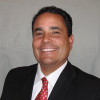 David OrtizCEO and president, Inline Rail · just outside San Diego, California
The FNDRS Podcast · California
California business · In-Line · David Ortiz
Nick Long with David Ortiz, owner of In-Line, on moving from the entrepreneurial trap to leading his company. Core values that filtered out misaligned employees, trusting a structured system, and his vision for faith-led business and investing in his team.
 Nick LongHost, CEO and co-founder of FNDRS
Nearby
Other states in the West
| West | Tax on the gain | Complexity | Deal volume |
|---|---|---|---|
| Alaska | None 2025 | Very low | Very low |
| Arizona | 2.5% 2025 | Medium | High |
| Colorado | 4.4% 2025 | Low | Medium |
| Hawaii | 7.25% 2025 | Medium | Low |
| Idaho | 5.3% 2025 | Medium | Low |
| Montana | 4.1% 2025 | Low | Very low |
| Nevada | None 2025 | Medium | Low |
| New Mexico | 5.9% 2025 | Medium | Low |
| Oregon | 9.9% 2025 | High | Medium |
| Utah | 4.5% 2025 | Medium | Medium |
| Washington | 9.9% 2025 | High | High |
| Wyoming | None 2025 | Low | Very low |
Your next step
The road starts with one step
Know where you stand in fifteen minutes, or talk the California sale through with a dealmaker. Either way, no pitch and no obligation.
Selling in California? Start with a conversation
No pitch and no obligation. If the honest answer is not yet, we will say so, and say what to work on.